Introduction
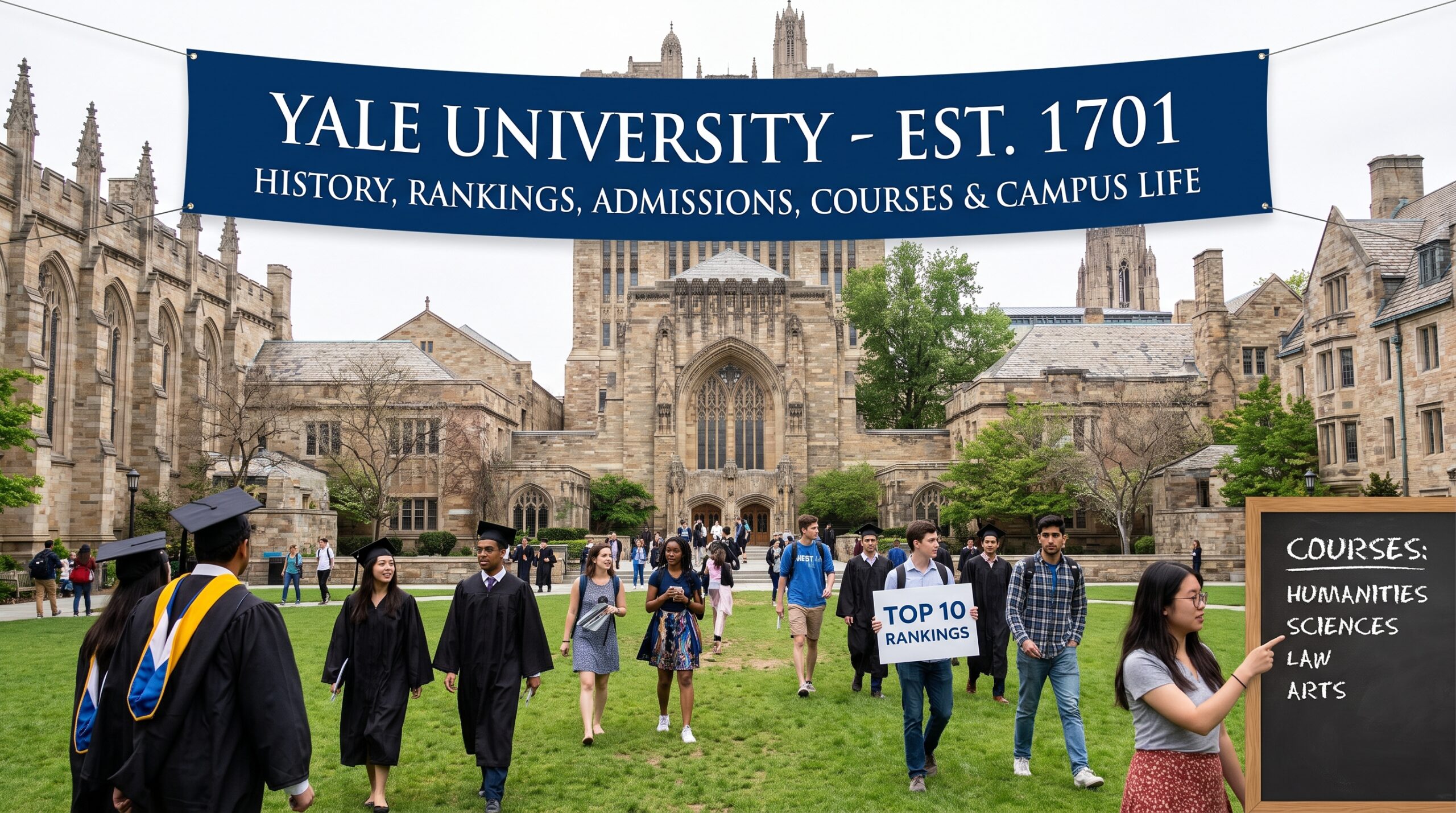
To understand Yale is to understand the evolution of American higher education itself. It is a place where medieval Gothic architecture meets cutting-edge quantum computing research, where future presidents debate policy in the same halls where groundbreaking Pulitzer Prize-winning plays are drafted. The university’s unwavering commitment to a liberal arts education at the undergraduate level, coupled with the ferocious specialization of its graduate and professional schools, creates a unique academic ecosystem. Unlike other elite institutions that may isolate undergraduates from the broader university, Yale intertwines them, fostering an environment where a freshman can comfortably converse with a Nobel laureate over coffee in a residential college buttery.
This comprehensive profile delves deep into the fabric of Yale University. It traces the institution’s long and occasionally tumultuous history, dissects its complex academic structure, explores the nuances of its highly selective admissions process, and paints a vivid picture of what campus life entails inside its famous residential colleges. For prospective students, academics, and historians alike, this is the definitive guide to the people, places, and philosophies that define Yale.
The Comprehensive History of Yale
Founding and Early Colonial Years
The origins of Yale trace back to 1701 when the General Court of the Colony of Connecticut passed “An Act for Liberty to Erect a Collegiate School.” The initiative was spearheaded by a group of ten Congregationalist ministers, later known as the “Founders,” who sought to create a local institution to educate young men for the ministry and state leadership. Dissatisfied with what they perceived as the creeping theological liberalism at Harvard, they desired an institution rooted more firmly in Calvinist orthodoxy.
Initially located in Saybrook, Connecticut, the Collegiate School struggled with location disputes and funding in its early decades. In 1716, the trustees voted to move the school permanently to New Haven. The defining moment of the school’s early history occurred in 1718, thanks to the persuasive efforts of Cotton Mather and Jeremiah Dummer, who reached out to Elihu Yale, a wealthy Welsh merchant and former governor of the East India Company settlement in Madras. Elihu Yale donated the proceeds from the sale of nine bales of goods, along with 417 books and a portrait of King George I. In profound gratitude, the institution was officially renamed Yale College.
The 19th Century: Expansion and Specialization
As the United States rapidly expanded throughout the 19th century, so too did Yale. The institution began to transition from a localized undergraduate college into a multifaceted university. This era was marked by the establishment of several pioneering graduate and professional schools. The Medical Institution of Yale College was chartered in 1810, followed by the Divinity School in 1822, and the Law School in 1824. In 1847, responding to the industrial revolution’s demand for technical expertise, the Sheffield Scientific School was founded, establishing a foothold for scientific and engineering research at an institution previously dominated by the classics.
Perhaps the most intellectually defining document of this era was the “Yale Report of 1828.” Written by faculty members, the report fiercely defended the classical liberal arts curriculum against growing national calls for vocational and practical training. It argued that the goal of a college education was the “discipline and the furniture of the mind,” rather than teaching a specific trade. This philosophy cemented Yale’s dedication to broad, humanistic education—a core value that persists today. Notably, in 1861, Yale’s Graduate School of Arts and Sciences awarded the first Doctor of Philosophy (Ph.D.) degrees ever granted in the United States, cementing its role as a pioneer in advanced research.
The 20th Century: Architectural Transformation and Coeducation
The 20th century brought seismic physical and cultural changes to the university. During the 1920s and 1930s, fueled by massive philanthropic donations from alumni like John Sterling and Edward S. Harkness, Yale’s campus was completely transformed. Architect James Gamble Rogers was commissioned to design a vast array of new buildings in the Collegiate Gothic style. This massive construction boom gave Yale its defining aesthetic: towering stone spires, gargoyles, leaded glass windows, and enclosed courtyards designed to emulate the medieval colleges of Oxford and Cambridge.
Harkness’s donation in 1933 specifically funded the creation of the Residential College System, fundamentally restructuring student life. The university was divided into smaller, close-knit communities to combat the anonymity of a growing student body, a system that remains the heart of the Yale undergraduate experience.
The late 1960s brought necessary and radical cultural modernization under the presidency of Kingman Brewster. Amidst national civil rights struggles and anti-war protests—most notably the 1970 May Day protests surrounding the Black Panther trials in New Haven—Yale navigated deep institutional change. The most significant of these was the admission of women to Yale College in 1969, dismantling centuries of all-male tradition and ushering in a new era of inclusivity and academic excellence.
The 21st Century: Modernization and Global Reach
In the modern era, under the presidencies of Richard Levin and Peter Salovey, Yale has focused on massive endowment growth, scientific infrastructure, and global integration. The university has heavily invested in Science Hill, creating state-of-the-art laboratories and research facilities to ensure Yale remains competitive with its peers in STEM fields. In 2017, the university completed its most significant physical expansion in decades with the opening of two new residential colleges: Benjamin Franklin College and Pauli Murray College, allowing an expansion of the undergraduate student body by roughly 15%.
Campus Architecture and Iconic Libraries
The Yale campus is widely regarded as an architectural museum, boasting an extraordinary concentration of masterworks spanning three centuries. The juxtaposition of ornate Collegiate Gothic structures with mid-century Brutalist and modernist masterpieces creates a breathtaking physical environment for learning and research.
Sterling Memorial Library
Standing as the physical and intellectual heart of the campus, Sterling Memorial Library is James Gamble Rogers’ ultimate masterpiece. Designed to resemble a grand European cathedral, Sterling substitutes religious iconography with academic symbolism. The “nave” of the library leads to the main circulation desk, situated where an altar would traditionally be placed. The intricate stained glass windows and stone carvings depict the history of writing, printing, and the university itself. It houses roughly 4 million volumes and features beautiful, quiet reading rooms that have hosted generations of studying Yalies.
Beinecke Rare Book & Manuscript Library
Directly contrasting the Gothic spires of Sterling is the Beinecke Rare Book & Manuscript Library, a marvel of mid-century modern architecture designed by Gordon Bunshaft of Skidmore, Owings & Merrill in 1963. The building features a minimalist, windowless exterior constructed of Vermont marble panels cut so thin (1.25 inches) that they allow sunlight to filter through into the interior, glowing with an ethereal amber hue. This design protects the priceless collection from direct sunlight damage. Inside, a towering six-story glass encasement houses some of the world’s most valuable texts, including an original Gutenberg Bible and John James Audubon’s *Birds of America*.
Modern and Brutalist Additions
Yale’s architectural courage extends into the realm of Brutalism. The Paul Rudolph Hall, home to the School of Architecture, is a monumental, ribbed-concrete structure of complex, interlocking spaces that evokes intense architectural debate. Eero Saarinen, a prominent Yale alumnus, contributed heavily to the campus mid-century look, designing both the Ingalls Rink (affectionately known as the “Yale Whale” due to its swooping, cetacean roofline) and the Ezra Stiles and Morse residential colleges, which sought to interpret the traditional college courtyard through a rugged, modern, stone-and-concrete lens.
Academic Structure and The Fourteen Schools
Yale University operates as a highly decentralized but deeply interconnected academic ecosystem, comprising Yale College, the Graduate School of Arts and Sciences, and twelve distinct professional schools. Each maintains its own dean, faculty, and admissions protocols, yet cross-registration is heavily encouraged, fostering interdisciplinary innovation.
Yale College (Undergraduate)
Yale College is the undergraduate heart of the university, offering a profound liberal arts education to approximately 6,500 students. Rather than imposing a strict, prescriptive “core curriculum,” Yale operates on a system of distributional requirements. Students are required to take courses across the humanities, sciences, and social sciences, while also fulfilling quantitative reasoning, writing, and foreign language mandates. This ensures a breadth of knowledge while allowing students immense freedom to explore over 80 different majors. The culmination of the Yale College experience is the “senior requirement,” which typically involves writing an original senior essay or completing a major research project or artistic portfolio.
Graduate School of Arts and Sciences (GSAS)
Founded in 1847, GSAS oversees all advanced degrees in the humanities, social sciences, and natural sciences. It offers programs leading to the M.A., M.S., M.Phil., and Ph.D. degrees across more than 70 departments and programs. GSAS students are deeply integrated into the undergraduate experience, often serving as Teaching Fellows, leading discussion sections, and grading papers, which creates a vibrant mentoring dynamic between graduates and undergraduates.
The Professional Schools
Yale’s twelve professional schools represent the apex of specialized graduate education globally. They are profoundly influential in their respective fields, producing global leaders, policymakers, and innovators.
- Yale Law School: Consistently ranked as the number one law school in the United States by virtually every major publication, Yale Law is notorious for its microscopic acceptance rate (around 4-6%) and its unique, non-traditional grading system (Honors, Pass, Low Pass, Fail). This eliminates class rankings and fosters a highly collaborative, intellectually pure environment over aggressive competition.
- Yale School of Medicine: A world leader in biomedical research and advanced clinical care, the school operates closely with the Yale New Haven Hospital. It pioneered the “Yale System” of medical education, which abolishes traditional grades and class rankings in favor of self-directed learning, continuous assessment, and a mandatory original research thesis.
- Yale School of Management (SOM): Unlike traditional MBA programs, SOM is uniquely mission-driven, operating under the motto “Educating leaders for business and society.” Its integrated curriculum breaks away from traditional siloes (like marketing or finance) and instead teaches subjects from the perspective of organizational stakeholders (e.g., “The Investor,” “The Customer,” “The Employee”).
- Yale School of the Environment: Formerly the School of Forestry, it is the oldest continually operating forestry school in the United States, founded in 1900. It is a premier global institution for environmental policy, sustainability, and conservation science.
- David Geffen School of Drama at Yale: Arguably the most prestigious theater program in the English-speaking world. It operates in tandem with the Tony Award-winning Yale Repertory Theatre, producing a staggering number of Hollywood and Broadway elites. Thanks to a $150 million donation from David Geffen in 2021, the school is completely tuition-free for all admitted students.
- Jackson School of Global Affairs: The newest professional school, established in 2022, transitioning from an institute into a full-fledged school to train future diplomats, global policymakers, and intelligence professionals to tackle the world’s most pressing geopolitical challenges.
The remaining esteemed institutions include the School of Architecture, School of Art, School of Music, School of Public Health, School of Nursing, and the Divinity School. Each contributes uniquely to the massive, multi-disciplinary engine of the university.
Notable Courses and Signature Academic Programs
Directed Studies (DS)
Often referred to as the intellectual boot camp of Yale, Directed Studies is an elite, highly selective interdisciplinary program for a small cohort of freshmen. The curriculum consists of three year-long courses: Literature, Philosophy, and Historical and Political Thought. Focusing exclusively on the foundational texts of the Western canon—from Homer and Plato to Dante, Machiavelli, and Nietzsche—DS requires a massive volume of weekly reading and rigorous analytical paper writing. It forms a tight-knit intellectual community and serves as a profound initiation into humanistic inquiry.
The “Shopping Period” (Registration Period)
A beloved hallmark of the Yale academic experience was the “Shopping Period,” recently formalized as the Registration Period. During the first two weeks of the semester, students are permitted to sit in on almost any course across the university without prior commitment. This creates a chaotic but exhilarating academic marketplace, encouraging students to sample disciplines outside their comfort zones, assess the teaching style of professors, and carefully curate their ideal semester schedule based on firsthand experience rather than mere course descriptions.
Computer Science and Psychology (Computing and the Arts)
Reflecting the modern demand for interdisciplinary STEM skills, Yale has pioneered joint majors that bridge the gap between hard coding and humanistic application. Programs combining Computer Science with Psychology, Economics, or the Arts allow students to explore the ethical, economic, and aesthetic implications of artificial intelligence, UI/UX design, and algorithmic behavior, producing graduates uniquely equipped for the modern tech landscape.
Admissions, Selectivity, and Financial Aid
The Admissions Landscape (2025–2026 Data)
Admission to Yale University remains one of the most fiercely contested processes in global higher education. For the academic cycles spanning 2025 to 2026, Yale continued to experience staggering application volumes, reflecting its enduring global prestige. The university typically receives between 50,000 and 57,000 applications annually for a freshman class of approximately 1,550 to 1,600 students.
The overall acceptance rate for the Class of 2028 plunged to a historic low of roughly 3.7%, while the Class of 2029 saw a slight normalization to 4.75% following a deliberate contraction in the application pool due to policy changes. Yale operates a Restrictive Early Action (REA) program, which typically yields a higher acceptance rate (ranging from 9% to 11%) compared to the brutal Regular Decision round, which often hovers around 2.5% to 3.5%. The university’s yield rate—the percentage of admitted students who choose to enroll—is extraordinarily high, consistently resting near 70%, a testament to Yale’s desirability among the world’s top students.
Test-Flexible Policy and Academic Profiles
Following a pandemic-era pause on standardized testing, Yale made headlines in early 2024 by announcing a return to required testing for Fall 2025 applicants, but with a progressive “test-flexible” approach. Instead of exclusively demanding the SAT or ACT, Yale allows students to fulfill the requirement by submitting Advanced Placement (AP) or International Baccalaureate (IB) scores. This policy acknowledges the value of standardized metrics while attempting to mitigate the socioeconomic disparities often inherent in traditional testing.
The academic profile of an admitted Yale student is practically flawless. Over 95% of admitted students rank in the top 10% of their graduating high school class. The middle 50% of SAT scores for enrolled students ranges from 1480 to 1560, while ACT scores fall tightly between 33 and 35. However, the admissions office explicitly states that “academic excellence is a prerequisite, not a differentiator.” Because thousands of applicants boast perfect statistics, the admissions committee relies heavily on subjective factors: deep intellectual curiosity, profound impact in extracurricular endeavors, exceptional letters of recommendation, and a highly compelling personal narrative articulated through the application essays.
Financial Aid: The Yale Scholarship
Yale operates under a strict “need-blind” admissions policy for all applicants, including international students. This means that a family’s financial situation is never considered during the admissions review process. Once admitted, Yale meets 100% of the demonstrated financial need of every student without requiring them to take out loans. The financial aid package, known as the Yale Scholarship, is entirely grant-based.
For the 2025-2026 academic year, more than half of the undergraduate student body received need-based aid, with the average grant exceeding $74,000 annually. For families earning less than $75,000 a year with typical assets, Yale requires a “zero parent contribution,” essentially providing a world-class education for free, covering tuition, room, board, and even providing stipends for travel and personal expenses. This unprecedented financial commitment ensures that socioeconomic status is never a barrier to a Yale education.
University Rankings and Global Reputation
Yale consistently commands a position at the absolute apex of domestic and international university rankings. While the methodologies of these rankings fluctuate, Yale’s reputation for academic rigor, faculty eminence, and robust endowment ensures its permanent fixture among the world’s top institutions.
Institutional Rankings (2025–2026)
| Ranking Publication | Global Rank | National (US) Rank |
|---|---|---|
| U.S. News & World Report | 9 | 4 |
| Times Higher Education (THE) | 10 | – |
| QS World University Rankings | 21 | – |
| TIME World’s Top Universities | 2 | 1 |
| Center for World University Rankings (CWUR) | 9 | 7 |
Subject-Specific Excellence
Beyond broad institutional rankings, Yale demonstrates staggering dominance across specific academic disciplines. The Yale Law School has essentially monopolized the #1 spot in U.S. News rankings for decades. The Department of History, the English Department, and the Psychology Department are routinely ranked within the top 5 globally. Yale’s School of Medicine is a permanent fixture in the top 10 for both research and primary care. Furthermore, Yale’s School of Art and the David Geffen School of Drama are almost universally considered the premier institutions for creative arts in the Western hemisphere.
Campus Life and The Residential College Experience
The defining characteristic of undergraduate life at Yale is the Residential College System. Modeled after Oxford and Cambridge, the system breaks down the large research university into intimate, manageable, and highly spirited communities.
The Fourteen Residential Colleges
Before arriving on campus, every freshman is randomly assigned to one of the 14 residential colleges: Berkeley, Branford, Davenport, Ezra Stiles, Grace Hopper, Jonathan Edwards, Pierson, Saybrook, Silliman, Timothy Dwight, Trumbull, Benjamin Franklin, and Pauli Murray. This randomization ensures a diverse microcosm of the broader university within each college. You remain affiliated with your residential college for all four years, and it serves as the core of your social, residential, and advising experience.
Each college is a self-contained architectural marvel, featuring its own dining hall, library, common room, subterranean gym, and unique basement amenities ranging from printing presses and pottery studios to darkrooms, movie theaters, and indoor basketball courts. The colleges fiercely compete against one another throughout the year in intramural sports to win the coveted Tyng Cup.
Freshman Counselors and The Dean’s Office
Each college is led by a Head of College (a senior faculty member who lives in the college and hosts master’s teas with global dignitaries) and a Residential College Dean (who oversees academic advising and personal well-being). Freshmen live together on the Old Campus during their first year, guided by “FroCos” (Freshman Counselors)—hand-picked seniors who live among the freshmen to provide mentorship, crisis management, and academic advice.
Dining Halls and Late-Night Butteries
Dining at Yale is a communal and often majestic experience. The dining halls range from the soaring, timber-vaulted ceilings of Branford to the modern, light-filled spaces of Benjamin Franklin. When the dining halls close, the “Butteries” open. These late-night, student-run cafes exist in the basement of every college, serving inexpensive comfort food (quesadillas, milkshakes, and grilled cheese) and acting as the premier social hubs for studying and socializing into the early hours of the morning.
Student Culture, Extracurriculars, and Traditions
The academic rigor of Yale is matched only by the ferocious dedication of its students to extracurricular pursuits. Over 500 registered student organizations ensure that campus culture is vibrant, diverse, and exceptionally busy.
Journalism, Debate, and The Arts
The Yale Daily News, operating out of its own dedicated building on York Street, is the oldest college daily newspaper in the nation and has served as the training ground for countless Pulitzer Prize winners and media titans. The Yale Political Union (YPU) is the oldest and largest collegiate debating society in America. It operates like a parliamentary body, divided into distinct political parties ranging from the far-left to the far-right, engaging in highly stylized debates and hosting prominent guest speakers.
Music and theater dominate the campus atmosphere. Yale is famous for its massive a cappella scene. The Whiffenpoofs, founded in 1909, are the world’s oldest collegiate a cappella group; comprised entirely of seniors, they tour the globe annually and hold a historic weekly residency at the legendary Mory’s Temple Bar.
Secret Societies: Tombs and Tap Night
No aspect of Yale is more heavily mythologized in popular culture than its senior secret societies. Emerging in the 19th century, societies like Skull and Bones, Scroll and Key, Wolf’s Head, Book and Snake, Elihu, and Berzelius select a small cohort of juniors each spring during the highly secretive “Tap Night.” Members spend their senior year meeting twice a week in windowless, formidable buildings known as “tombs.” While Hollywood often portrays them as sinister cabals of global manipulation, their modern reality is largely focused on deep, intense personal bonding, networking, and the sharing of deeply personal life histories (the “biography”) among a diverse group of campus leaders.
Athletics: The Bulldogs and The Game
Yale fields 35 varsity athletic teams, known as the Bulldogs, competing in the NCAA Division I Ivy League. The university boasts a storied athletic history; Walter Camp, a Yale graduate, is widely considered the “Father of American Football,” having invented the line of scrimmage and the system of downs. The Yale Bowl, opened in 1914, was the first bowl-shaped stadium in the country and inspired the design of the Rose Bowl.
The pinnacle of the athletic and social calendar is “The Game,” the annual football clash between Yale and Harvard. Dating back to 1875, it is one of the oldest and most fierce rivalries in all of sports, characterized by massive tailgates, intricate pranks, and fierce institutional pride.
Notable Alumni and Faculty Legacy
The output of human capital from Yale University is staggering. Its alumni network spans the highest echelons of government, law, business, science, and the arts, proving that the institution functions as a primary incubator for global leadership.
Political Leaders and Jurists
Yale has educated five U.S. Presidents: William Howard Taft, Gerald Ford, George H.W. Bush, Bill Clinton, and George W. Bush. The Yale Law School, in particular, acts as a pipeline to the Supreme Court. Recent and current Justices including Clarence Thomas, Samuel Alito, Sonia Sotomayor, and Brett Kavanaugh all hold degrees from Yale.
Arts, Literature, and Entertainment
The university’s footprint in Hollywood and Broadway is unparalleled. Alumni include Academy Award winners Meryl Streep, Jodie Foster, Lupita Nyong’o, Paul Newman, and Frances McDormand. Literary giants such as Sinclair Lewis, Tom Wolfe, and Thornton Wilder walked the halls of Yale, alongside prominent journalists like Bob Woodward and Fareed Zakaria.
Innovators and Business Leaders
Yale’s influence in the business and tech sectors is immense. Alumni include Stephen Schwarzman (co-founder of Blackstone), Ben Silbermann (co-founder of Pinterest), Indra Nooyi (former CEO of PepsiCo, who graduated from the School of Management), and historical inventors like Samuel F.B. Morse (telegraph) and Eli Whitney (cotton gin).
Yale and the City of New Haven
A Symbiotic Relationship
Yale cannot be understood without its host city, New Haven. Known as the “Elm City,” New Haven is a post-industrial urban center that provides a vibrant, gritty, and culturally rich backdrop to the ivy-covered walls of the university. The relationship between the “town and gown” has historically been complex, but in recent decades, Yale has invested heavily in the economic development of New Haven. Yale New Haven Hospital and the university itself are by far the largest employers in the region, driving a massive biomedical and tech startup boom in the downtown area.
Cultural Hubs and The Culinary Scene
The city offers incredible cultural assets, many heavily subsidized or operated by the university. The Yale University Art Gallery and the Yale Center for British Art offer world-class collections that are entirely free and open to the public. The Peabody Museum of Natural History, recently undergoing a massive renovation, is a treasure trove of paleontology.
Crucially, New Haven is legendary for its culinary scene, specifically its unique style of pizza, locally known as “apizza.” The fierce, historic rivalry between Frank Pepe Pizzeria Napoletana, Sally’s Apizza, and Modern Apizza is a cultural cornerstone. Experiencing a charred, coal-fired clam pie on Wooster Street is as much a rite of passage for a Yale student as surviving finals week in Sterling Memorial Library.
Frequently Asked Questions (FAQ)