Introduction
The University of California, Berkeley (UC Berkeley, Cal, or simply Berkeley) is the flagship campus of the ten-campus University of California system. It is widely considered the most prestigious public university in the world. Since its chartering in 1868, Berkeley has become a global powerhouse for innovation, research, and political activism. Located on the east side of the San Francisco Bay, it offers a blend of academic intensity and vibrant, progressive culture that is unique to the Bay Area.
A Deep History
Berkeley’s origins date back to the 1855 founding of the private College of California. In 1868, this institution merged with the state-run Agricultural, Mining, and Mechanical Arts College to form the University of California. The campus grew rapidly, and by the early 20th century, it was already challenging the Ivy League for academic dominance.
The university’s identity was fundamentally shaped by the Free Speech Movement of 1964. Students protested restrictions on political advocacy on campus, sparking a nationwide movement that cemented Berkeley’s reputation as a leader in social justice and civil rights activism—a legacy that continues to influence campus politics today.
Global Rankings & Research Impact
Berkeley consistently ranks in the top tier of global universities. Its research output is staggering, with faculty and alumni having been awarded over 100 Nobel Prizes.
| Ranking Source | Performance Status |
|---|---|
| U.S. News Global | #7 Globally |
| Public University Rank | #1 in the US |
| Research Output | Among Top 5 in the US |
Berkeley is a leader in fields such as Physics, Computer Science, Economics, and Chemistry. It played a critical role in the Manhattan Project, the development of the internet (ARPANET), and the discovery of 16 chemical elements in the periodic table.
Academic Structure & Colleges
Berkeley is organized into 14 schools and colleges, each maintaining high standards of admission:
- College of Letters and Science (L&S): The largest college, encompassing the arts, humanities, social sciences, and natural sciences.
- College of Engineering: Renowned globally for Electrical Engineering and Computer Sciences (EECS).
- Haas School of Business: One of the oldest and most selective business schools, known for fostering “principled leadership.”
- College of Chemistry: Frequently ranked as the best chemistry department in the world.
- College of Environmental Design: A premier hub for urban planning, architecture, and sustainability.
Admissions Strategy
Admission is highly competitive. Berkeley uses a “holistic review,” meaning they don’t just look at grades; they evaluate you as an individual.
What they look for:
- Academic Rigor: They prefer students who challenge themselves with the most difficult courses available (AP, IB, Honors).
- Leadership & Initiative: They want to see impact. Have you started a project, led a team, or conducted original research?
- Personal Insight Questions: These are critical. Use your essays to explain your context—what obstacles have you overcome? What drives your curiosity?
Campus Life & Culture
Life at Cal is fast-paced. Between “Berkeley Time” (classes starting 10 minutes late) and the bustling streets of Telegraph Avenue, students learn to balance rigorous study with an active social life.
Traditions & Landmarks:
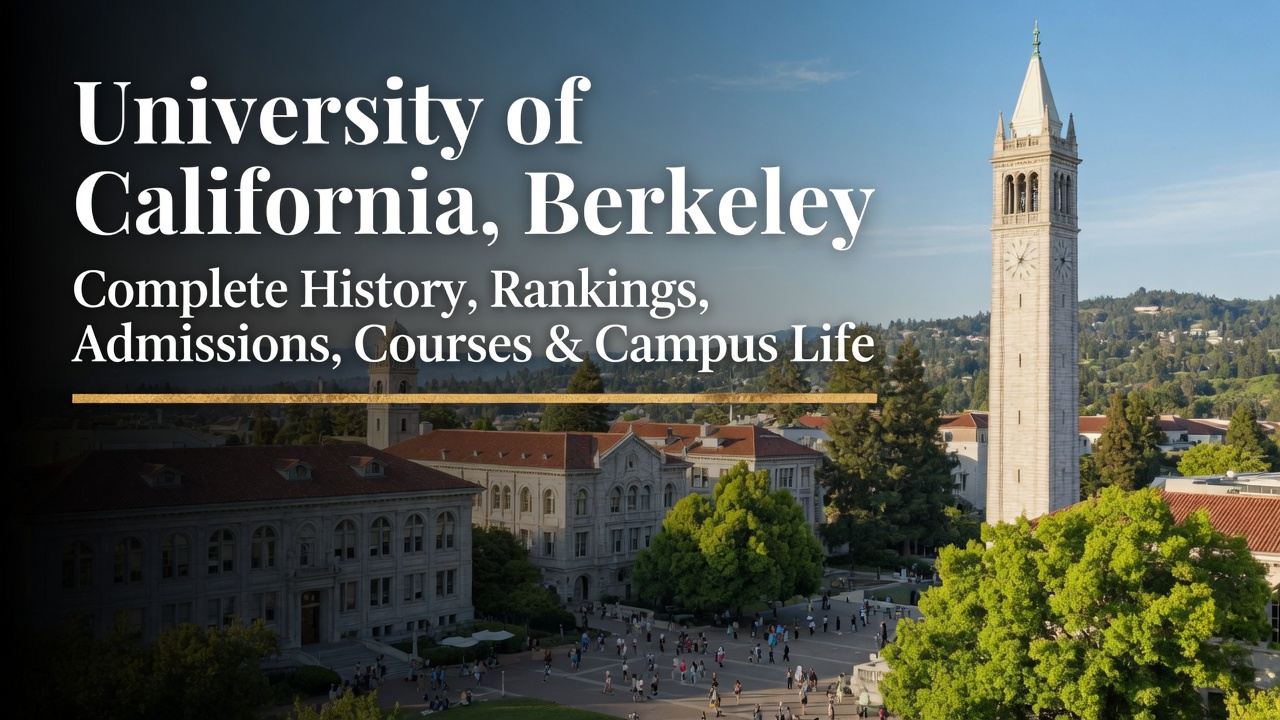
- Sather Tower (The Campanile): Modeled after the bell tower in St. Mark’s Square, Venice. Students visit it for the views and the legendary “4.0 ball” good luck charm.
- Memorial Stadium: Home to the Golden Bears, it is the site of “The Big Game”—the annual, intense rivalry match against Stanford University.
- The Diag: While not called “the Diag” like at Michigan, the central campus plazas are where you find all the clubs, protests, and daily buzz.
Frequently Asked Questions
Is Berkeley too hard to graduate from?
The curriculum is challenging, especially in STEM fields. However, the university provides extensive tutoring services (like the Student Learning Center) to support students in their academic journey.
What is the Quarter vs. Semester system?
Berkeley operates on a Semester system (Fall and Spring). This gives you more time to dive deep into subjects compared to a quarter system.
Is it safe?
Like any major university in a large city, students are encouraged to be aware of their surroundings. The university provides extensive safety services, including UCPD and “Night Safety Shuttles” to help students get around safely at night.