Introduction
Boasting over 58,000 students and a massive network of over 500,000 alumni, Melbourne is a truly global institution, with nearly half of its student population coming from over 150 different countries. It acts as a primary engine for Australian innovation, consistently leading in research funding and commercialization. Whether through its world-renowned research in medicine, arts, or engineering, the university remains a driving force in shaping Australia’s future and impact on the global stage.
The History of the University
Founded by an Act of the Victorian Parliament in 1853, the university began with just 16 students and four professors. Its early years were focused on establishing a curriculum that reflected the colonial aspirations of the era—primarily law, medicine, and arts—while maintaining ties to the British academic tradition.
The university expanded significantly throughout the 20th century, cementing its status as Australia’s leading research institution. A transformative moment in its modern history occurred in 2008 with the introduction of the “Melbourne Model,” an ambitious restructuring of the university’s degree programs. This shift aimed to align the university’s degree structures with leading North American and European practices, focusing on broad, research-based undergraduate study followed by specialized postgraduate degrees, effectively redefining the higher education landscape in the Southern Hemisphere.
The Melbourne Model: A Unique Academic Structure
The “Melbourne Model” is the university’s signature academic structure, designed to provide students with a deep, specialized education while maintaining the flexibility to explore interdisciplinary interests. This structure consists of:
- Three-Year Undergraduate Degrees: Instead of the traditional four-year professional degrees common elsewhere in Australia, Melbourne focuses on seven broad degrees (Arts, Science, Commerce, Biomedicine, Design, Fine Arts, and Music).
- Specialization at the Graduate Level: Students gain broad foundational knowledge during their undergraduate years. Professional qualifications (in fields like Law, Medicine, or Engineering) are pursued at the graduate level, where students build upon their solid undergraduate base.
- Breadth Subjects: A core component of every degree, students are required to take “breadth” subjects outside of their core discipline (e.g., a Science student taking a subject in Philosophy or Music). This encourages the critical, interdisciplinary thinking highly valued by modern employers.
“At Melbourne, we want our students to create their own path, with the power to choose their own direction and explore new options along the way. This approach develops the critical, analytical, and adaptive capabilities sought after by global employers.”
Global Rankings (2025–2026)
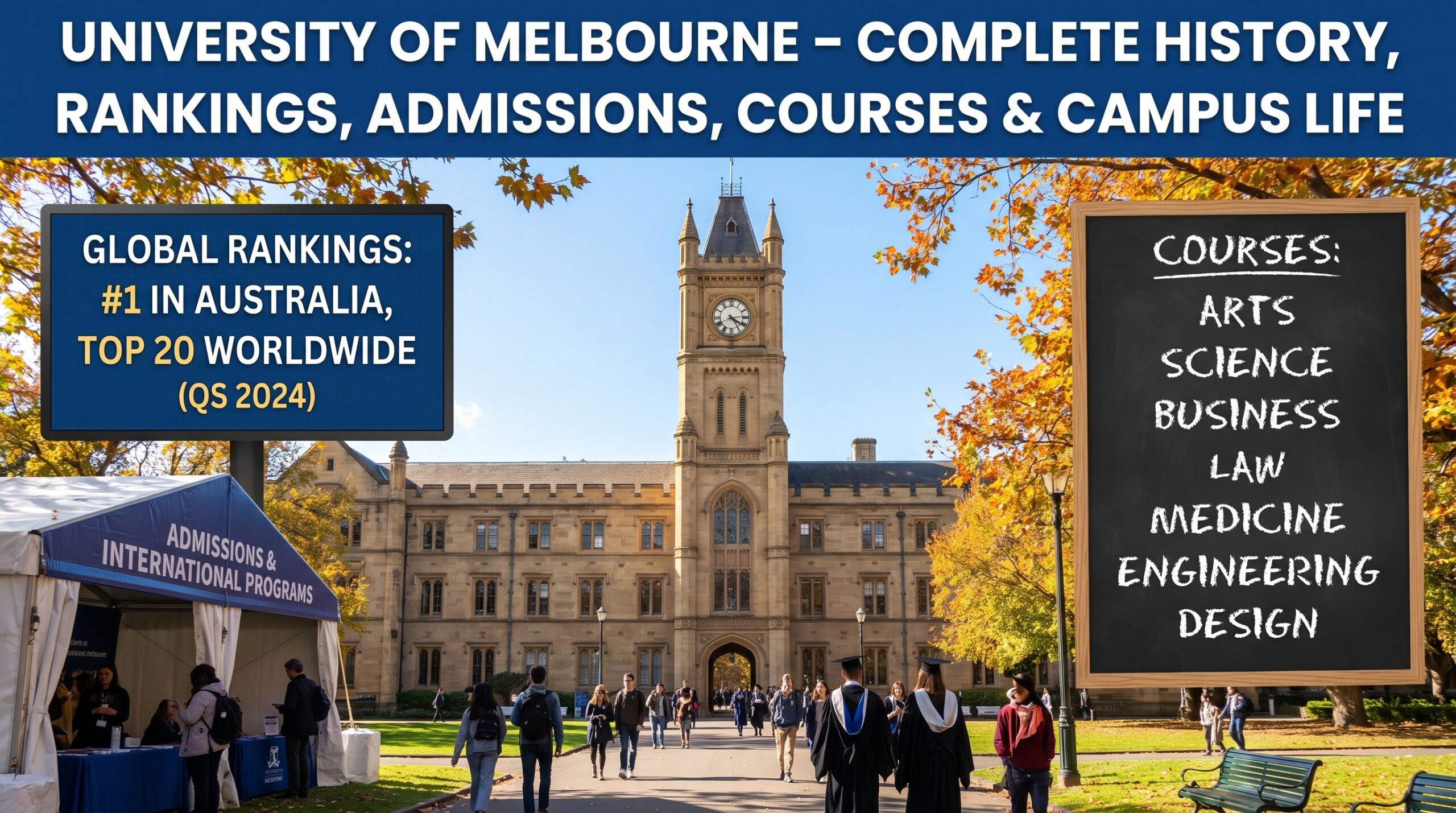
The University of Melbourne consistently dominates Australian rankings and maintains a high profile in global indices, reflecting its high research output and academic reputation.
| Ranking Source | Global Rank | Australia Rank |
|---|---|---|
| QS World University Rankings 2027 | 22 | 1 |
| Times Higher Education (THE) 2026 | 37 | 1 |
| Academic Ranking of World Universities (ARWU) 2025 | 38 | 1 |
Admissions & Requirements
Admission to the University of Melbourne is highly competitive. The university evaluates applicants based on their academic performance in recognized secondary school qualifications (such as the VCE, IB, or A-Levels) and English language proficiency.
For International Students:
- Entry Scores: The university publishes “guaranteed entry scores” for many international qualifications (e.g., IB score or GCE A-Levels). Achieving these scores, combined with meeting subject prerequisites and English requirements, assures admission.
- English Proficiency: All international students must demonstrate proficiency through recognized tests like IELTS, TOEFL, or the PTE Academic.
- Documentation: Applicants must provide certified academic transcripts. For tertiary study outside Australia, verification through services like Digitary VIA or My eQuals is standard.
Campus Life & Facilities
The Parkville campus is the university’s main hub, located just minutes from Melbourne’s city center. It is a stunning blend of gothic revival architecture (such as the iconic Old Quadrangle) and modern, sustainable research facilities.
Student Experience:
- Clubs and Societies: With over 200 student-run clubs, the university offers a vibrant social scene, ranging from the Melbourne University Law Students’ Society to hobbyist and cultural groups.
- Student Support: The “Stop 1” center acts as a one-stop-shop for all student administrative, academic, and well-being inquiries.
- Campus Facilities: Students have access to extensive libraries, the Sports Precinct, and various art galleries and museums (such as the Ian Potter Museum of Art) integrated into the campus grounds.
Frequently Asked Questions